¿Cuál es la necesidad de introducir una atmósfera de argón de alta pureza en un horno tubular? Preservar la integridad del material
Actualizado hace 3 meses
El uso de una atmósfera de argón de alta pureza es una salvaguarda crítica en el procesamiento de materiales a alta temperatura. Su necesidad principal radica en su capacidad para desplazar gases atmosféricos reactivos, como el oxígeno y el nitrógeno, que de otro modo provocarían reacciones químicas incontroladas. Al establecer un entorno estrictamente inerte, el argón garantiza que los cambios físicos y químicos que ocurren dentro del horno tubular sean el resultado de procesos térmicos previstos y no de contaminación ambiental.
Idea clave: el argón actúa como un escudo protector que preserva la identidad química y la integridad mecánica de los materiales durante el recocido. Evita la oxidación no deseada, mantiene una estequiometría precisa y asegura que la evolución microestructural esté impulsada por la termodinámica interna y no por reacciones químicas superficiales.
Prevención de la oxidación y la contaminación incontroladas
Supresión de la oxidación secundaria
En materiales como el titanio o los recubrimientos de dióxido de titanio (TiO2), las altas temperaturas pueden desencadenar una oxidación secundaria incontrolada. Una atmósfera de argón aísla el sustrato, garantizando que el espesor de la capa de óxido permanezca precisamente controlado. Esto es vital para mantener la micro-morfología prevista y el rendimiento biológico o químico específico del recubrimiento.
Protección de metales altamente reactivos
Elementos como el niobio (Nb), el titanio (Ti) y el aluminio (Al) presentan una actividad química extrema a temperaturas elevadas. Sin argón, estos metales reaccionan fácilmente con el oxígeno y el nitrógeno, formando películas frágiles de óxido o nitruros. La protección con argón garantiza que los datos de equilibrio de fases reflejen las propiedades intrínsecas del material y no impurezas superficiales.
Preservación de los metales de transición
Los metales de transición como el molibdeno y el tungsteno son susceptibles a una oxidación profunda cuando se calientan. Introducir un flujo continuo de argón de alta pureza desplaza el oxígeno dentro del tubo, evitando que estos metales se degraden. Esto permite un procesamiento estable bajo condiciones estequiométricas definidas, lo cual es necesario para ajustar las estructuras electrónicas.
Mantenimiento de la integridad estructural y mecánica
Protección del carácter metálico y la ductilidad
Al sinterizar metales activos como el aluminio, la presencia de incluso trazas de oxígeno puede formar películas frágiles de óxido. Estas películas comprometen la integridad estructural del producto final. Al mantener un medio inerte, el argón asegura que el material conserve su carácter metálico, dando como resultado la resistencia mecánica y ductilidad esperadas.
Prevención de la pérdida de carbono y la descarburación
Durante la pirólisis de precursores (como el citrato de sodio) o el recocido de acero con alto contenido de carbono, la exposición al oxígeno conduce a combustión oxidativa o descarburación. El argón protege la estructura de carbono, garantizando la estabilidad de las estructuras de оболσ?
Core Takeaway: argon serves as a protective shield that preserves the chemical identity and mechanical integrity of materials during annealing. It prevents unintended oxidation, maintains precise stoichiometry, and ensures that microstructural evolution is driven by internal thermodynamics rather than surface-level chemical reactions.
Preventing Uncontrolled Oxidation and Contamination
Suppression of Secondary Oxidation
In materials like titanium or titanium dioxide (TiO2) coatings, high temperatures can trigger uncontrolled secondary oxidation. An argon atmosphere isolates the substrate, ensuring that the oxide layer thickness remains precisely controlled. This is vital for maintaining the intended micro-morphology and the specific biological or chemical performance of the coating.
Protection of Highly Reactive Metals
Elements such as niobium (Nb), titanium (Ti), and aluminum (Al) exhibit extreme chemical activity at elevated temperatures. Without argon, these metals react readily with oxygen and nitrogen, forming brittle oxide films or nitrides. Argon protection ensures that phase equilibrium data reflects the intrinsic properties of the material rather than surface-level impurities.
Preservation of Transition Metals
Transition metals like molybdenum and tungsten are susceptible to deep oxidation when heated. Introducing a continuous flow of high-purity argon displaces the oxygen within the tube, preventing these metals from degrading. This allows for stable processing under defined stoichiometric conditions, which is necessary for tuning electronic structures.
Maintaining Structural and Mechanical Integrity
Protecting Metallic Nature and Ductility
When sintering active metals like aluminum, the presence of even trace oxygen can form brittle oxide films. These films compromise the structural integrity of the final product. By maintaining an inert medium, argon ensures the material retains its metallic nature, resulting in expected mechanical strength and ductility.
Preventing Carbon Loss and Decarburization
During the pyrolysis of precursors (like sodium citrate) or the annealing of high-carbon steel, oxygen exposure leads to oxidative combustion or decarburization. Argon protects the carbon framework, ensuring the stability of carbon shell structures or preventing the loss of surface carbon in steel. This is essential for maintaining the conductivity and hardness of the final sample.
Stability of Reduced Metal Alloys
In the production of catalysts involving cobalt-iron or other alloys, it is critical to prevent the reduced metal components from contacting oxygen. An argon atmosphere ensures the stability of the metal valence states. This protection allows for the formation of high-crystallinity phases without the interference of unwanted metal oxides.
Understanding the Trade-offs and Limitations
Gas Purity and Detection
The "high-purity" aspect of argon is non-negotiable because even parts-per-million (ppm) levels of oxygen or moisture can cause surface discoloration or thin-film oxidation. For highly sensitive alloys, standard-grade argon may be insufficient, requiring additional gas purification stages or the use of oxygen getters within the furnace tube.
Flow Rate and Thermal Uniformity
While argon protects the material, the flow rate must be carefully managed. A flow that is too low may fail to fully displace oxygen or permit back-diffusion from the furnace outlets. Conversely, an excessively high flow rate can disrupt the thermal field uniformity, creating temperature gradients across the sample that lead to inconsistent annealing results.
Cost and Complexity
Compared to nitrogen or vacuum environments, high-purity argon can be more expensive and logistically demanding. While nitrogen is often used as a cheaper inert gas, it cannot be used with elements like titanium or niobium, as they will react to form nitrides at high temperatures. Users must weigh the cost of argon against the specific chemical sensitivities of their samples.
Applying Argon Protection to Your Process
How to Choose the Right Strategy for Your Goal
- If your primary focus is biocompatible coatings: Use a stable argon flow to ensure the micro-morphology of oxide layers remains consistent for biological performance.
- If your primary focus is mechanical ductility: Prioritize high-purity argon to prevent the formation of brittle oxide layers on the surface of reactive metals like aluminum or magnesium.
- If your primary focus is electronic or catalytic properties: Ensure the argon atmosphere is strictly maintained to preserve specific metal valence states and precise doping levels.
- If your primary focus is carbon-based nanomaterials: Utilize the tube furnace’s argon flow to prevent the oxidative loss of precursors during high-temperature pyrolysis.
The integrity of your material's phase, structure, and chemistry depends entirely on the stability of the environment you create within the furnace.
Summary Table:
| Key Function | Material Benefits | Risk Without Argon Protection |
|---|---|---|
| Oxygen Displacement | Prevents oxidation & decarburization | Surface scaling, loss of ductility |
| Inert Shielding | Protects reactive metals (Ti, Nb, Al, Mg) | Formation of brittle nitrides/oxides |
| Phase Control | Maintains precise metal valence states | Chemical impurity & phase instability |
| Structural Integrity | Preserves carbon frameworks & stoichiometry | Surface degradation & mechanical failure |
Elevate Your Material Research with THERMUNITS Precision
Achieve uncompromising results in your annealing and sintering processes with THERMUNITS. As a leading manufacturer of high-temperature laboratory equipment, we specialize in providing advanced thermal solutions tailored for material science and industrial R&D. Our Atmosphere and Tube Furnaces are specifically engineered to maintain the high-purity environments—like argon or vacuum—necessary for protecting the chemical and mechanical integrity of your advanced materials.
From Muffle, Vacuum, and Rotary Furnaces to complex CVD/PECVD systems, Hot Press furnaces, and Vacuum Induction Melting (VIM) units, we provide the tools researchers need to push the boundaries of technology. Whether you are working on biocompatible coatings, reactive alloys, or carbon nanomaterials, our equipment ensures precise temperature control and atmospheric stability.
Ready to optimize your thermal processing? Contact our expert team today to discuss your specific requirements and find the perfect heat treatment solution for your laboratory.
Referencias
- Tsanka Dikova, Neli Mintcheva. Morphology and Structure of TiO2 Nanotube/Carbon Nanostructure Coatings on Titanium Surfaces for Potential Biomedical Application. DOI: 10.3390/ma17061290
Productos mencionados
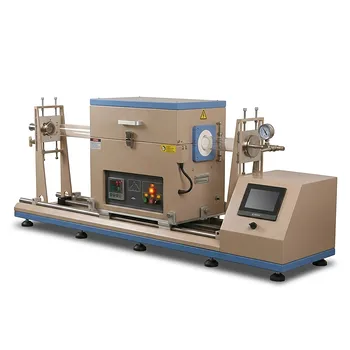
- Horno de tubo vertical de vacío y atmósfera de 1700°C con tubo de alúmina de 80 mm
- Horno tubular compacto de alta temperatura a 1600 °C con tubo de alúmina de 50 mm y bridas de vacío para sinterización de materiales
- Horno de tubo rotatorio de 900°C máx. con tubo de aleación 310S de 8 pulgadas y calefacción multizona opcional para calcinación de materiales industriales
- Horno de tubo vertical dividido con tubo de cuarzo de 1200°C y bridas de vacío de acero inoxidable para procesamiento térmico rápido
- Horno de tubo de alta temperatura de 1700 °C con sistema de bomba turbomolecular de alto vacío y mezclador de gas con controlador de flujo másico multicanal
La gente también pregunta
- ¿Cómo se utiliza un horno de tubo vertical de grado industrial en la lixiviación de residuos de fundición? Mejore la eficiencia de recuperación de metales
- ¿Cuál es la función de un horno tubular vertical de grado de laboratorio en la pirólisis rápida? Optimice la investigación de compuestos.
- ¿Cómo facilita un horno tubular vertical la fusión de aleaciones termoeléctricas? Síntesis de precisión para la homogeneidad del material.
- ¿Por qué es indispensable un sensor termopar para monitorear el horno de tubo vertical durante la producción de nanohilos de óxido de galio? Optimizar el crecimiento VLS
- ¿Cuáles son las ventajas de utilizar un horno tubular vertical para experimentos en crisoles que simulan interacciones acero-escoria?

Equipo técnico · ThermUnits
Last updated on Jun 03, 2026
Productos relacionados

Horno de tubo vertical de vacío y atmósfera de 1700°C con tubo de alúmina de 80 mm

Horno tubular compacto de alta temperatura a 1600 °C con tubo de alúmina de 50 mm y bridas de vacío para sinterización de materiales
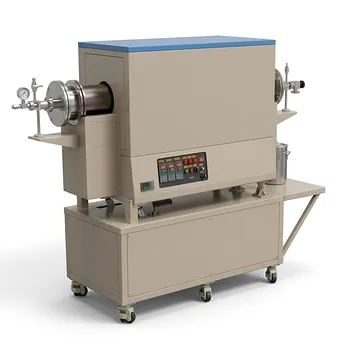
Horno de tubo rotatorio de 900°C máx. con tubo de aleación 310S de 8 pulgadas y calefacción multizona opcional para calcinación de materiales industriales
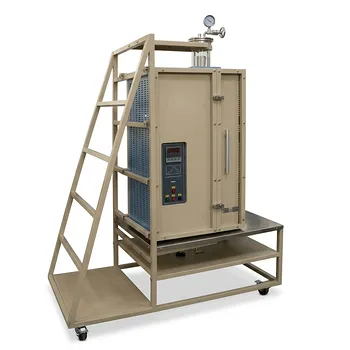
Horno de tubo vertical dividido con tubo de cuarzo de 1200°C y bridas de vacío de acero inoxidable para procesamiento térmico rápido

Horno de tubo de alta temperatura de 1700 °C con sistema de bomba turbomolecular de alto vacío y mezclador de gas con controlador de flujo másico multicanal

Horno de tubo de 1100 °C con brida de vacío y controlador de temperatura programable para ciencia de materiales y tratamiento térmico industrial

Horno de tubo rotatorio de tres zonas de 5 pulgadas con sistema de suministro de gas integrado y capacidad de 1200 °C para procesamiento CVD de materiales avanzados

Horno tubular vertical de cuarzo de 5 pulgadas y 1200°C con bridas de vacío de acero inoxidable

Horno de Tubo de Gas Hidrógeno 1700°C con Tubo de Proceso de Alúmina de 60mm y Detector de Seguridad de Hidrógeno Integrado

Horno de tubo partido de seis zonas para alta temperatura de 1700C con tubo de alúmina y bridas refrigeradas por agua

Horno de tubo de cuarzo vertical dividido compacto con bridas de vacío de acero inoxidable para enfriamiento térmico rápido y procesamiento de materiales en atmósfera controlada

Horno de tubo de sobremesa de alta temperatura de 1700C con zona de calentamiento de 5 pulgadas, tubo de alúmina de alta pureza y bridas de sellado al vacío
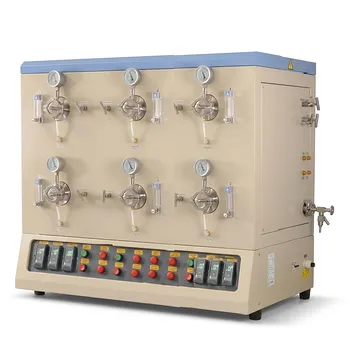
Horno de tubo multicanal de alto rendimiento a 1200°C con tubos de cuarzo de 50 mm para recocido e investigación de diagramas de fase de materiales

Horno de tubo de vacío compacto de alta temperatura de 1800 °C con tubo de alúmina de 60 mm de diámetro exterior y elementos calefactores Kanthal MoSi2

Horno de tubo de tres zonas con tubo de cuarzo de 11 o 15 pulgadas y bridas abisagradas para tratamiento térmico en atmósfera de vacío

Horno de tubo vertical de alta temperatura 1700°C para esferificación de polvos y sinterización de materiales
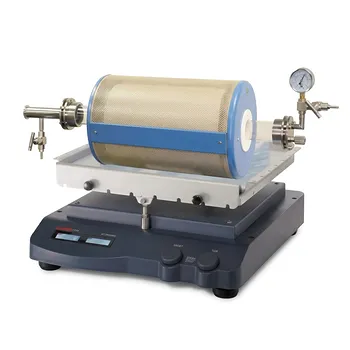
Horno tubular basculante de alta temperatura con tubo de cuarzo y brida de vacío para síntesis de materiales

Horno tubular automatizado de alta temperatura de 5 pulgadas para investigación autónoma de materiales y desarrollo avanzado de laboratorio
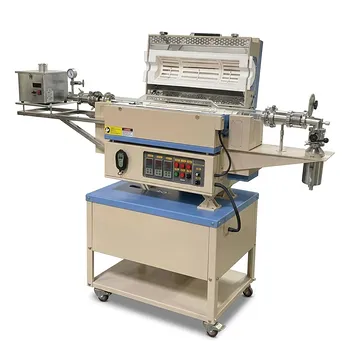
Horno de tubo rotatorio de 5 pulgadas con sistema automático de alimentación y recepción, 1200°C, procesamiento de polvo CVD de tres zonas